
Business
Kellogg Innovation Network: How Global Leaders Build the Future Together


- /home/u894110437/domains/wavesmagazine.co.uk/public_html/wp-content/plugins/mvp-social-buttons/mvp-social-buttons.php on line 27
https://wavesmagazine.co.uk/wp-content/uploads/2026/04/kellogg-innovation-network-1000x600.webp&description=Kellogg Innovation Network: How Global Leaders Build the Future Together', 'pinterestShare', 'width=750,height=350'); return false;" title="Pin This Post">
- Share
- Tweet /home/u894110437/domains/wavesmagazine.co.uk/public_html/wp-content/plugins/mvp-social-buttons/mvp-social-buttons.php on line 72
https://wavesmagazine.co.uk/wp-content/uploads/2026/04/kellogg-innovation-network-1000x600.webp&description=Kellogg Innovation Network: How Global Leaders Build the Future Together', 'pinterestShare', 'width=750,height=350'); return false;" title="Pin This Post">
What Is the Kellogg Innovation Network?
The Kellogg Innovation Network, widely known as KIN, is a global platform built on the principle that no single organization can solve the world’s most complex challenges alone. Rooted in the Kellogg School of Management at Northwestern University, KIN brings together senior executives, entrepreneurs, academics, and policy makers to share ideas, build cross-sector alliances, and drive transformative thinking across industries. It is not a traditional membership club or a lecture series. It is a living ecosystem where business collaboration meets long-term thinking, and where innovation purpose guides every conversation.
What sets KIN apart from similar platforms is its commitment to what it calls radical collaboration the belief that meaningful breakthroughs happen when people from entirely different sectors sit at the same table without hierarchy. A healthcare executive, a climate scientist, a technology entrepreneur, and a public official can all learn from each other in ways that no single discipline could produce on its own. This is the founding idea that has shaped KIN since its early years, and it remains the thread running through every initiative the network pursues today.
The Origins and History of KIN
The Kellogg Innovation Network was established to close a persistent gap between academic research and real-world business application. While the Kellogg School had long been recognized for its rigorous research and executive education, leaders from industry often found that formal education stopped short of addressing the messy, fast-moving challenges they actually faced in their organizations. KIN was designed to bridge that gap.
In its early form, KIN operated as a relatively small gathering of executives who came together around specific business challenges. Over time, as digital transformation began reshaping every sector and as sustainability moved from a side conversation to a boardroom priority, the network expanded its scope significantly. The model of bringing together thinkers from different worlds public sector, private enterprise, civil society, and academia proved effective enough that KIN grew into something far larger than its founding vision had anticipated. It evolved into a network with genuine global reach, hosting events across continents and building partnerships that span industries and cultures.
The Purpose and Mission Behind KIN
At its core, KIN exists to make innovation more intentional. In most organizations, innovation happens reactively triggered by competitive pressure, regulatory change, or market disruption. KIN pushes back on that model. It argues that organizations capable of sustained innovation are those that invest in continuous learning, cultivate an entrepreneurial mindset at every level of leadership, and think seriously about where the world is heading rather than where it has been.
The mission also carries a strong social dimension. KIN is not purely focused on commercial outcomes. Its work incorporates sustainability, equity inclusion, climate action, and social impact ventures as legitimate subjects of business innovation not as corporate responsibility footnotes, but as strategic priorities that shape how sustainable business models are designed and evaluated. For KIN, innovation that ignores its social consequences is incomplete innovation.
This dual focus on performance and on purpose is what attracts the kind of leaders who participate in KIN. They are not looking for easy answers. They are looking for a community that takes the hard questions seriously.
How the Kellogg Innovation Network Actually Works
Understanding how KIN functions requires letting go of the idea that it works like a typical professional network. There are no passive memberships. Participants are expected to contribute to share what they know, to challenge assumptions, and to bring problems that actually matter to their organizations into the conversation. The network operates through a series of structured but open-ended engagements that are designed to produce insight rather than just information.
KIN engagements typically include a mix of facilitated dialogue, expert presentations, and working sessions where participants tackle real strategic challenges together. The facilitators and faculty who guide these sessions draw on Kellogg’s research base while also learning from the practitioners in the room. This bidirectional exchange academics learning from executives, executives learning from researchers is one of the things that makes KIN conversations genuinely productive.
The network also builds relationships that persist long after a summit or session ends. Participants often describe KIN as one of the few places where they have developed genuine strategic partnerships with peers they would never have met in their normal professional circles. These relationships become the infrastructure for public-private innovation, for joint ventures, and for the kind of cross-sector alliances that can actually move the needle on systemic challenges.
The KIN Global Summit: Where the Network Comes Alive
The KIN Global Summit is the flagship event of the Kellogg Innovation Network and one of the most substantive gatherings in the world of business innovation. Unlike conventional conferences where speakers deliver polished presentations to passive audiences, the KIN Global Summit is built around active participation. It draws senior leaders from across industries and geographies, bringing them together around themes that reflect the most pressing challenges and opportunities at the intersection of business and society.
Themes at recent summits have spanned AI trends and digital transformation, climate action and energy transition, the future of work, sustainable business models, and the evolving relationship between public institutions and private enterprise. What makes the summit distinctive is not the themes themselves but the way they are explored through structured dialogue, small group working sessions, and facilitated debates that push participants beyond surface-level positions into genuine strategic thinking.
The summit also functions as a signal of where serious leaders believe innovation is heading. The conversations that happen at KIN Global Summits often surface ideas and frameworks that show up in boardrooms and policy discussions months or years later. For participants, it is one of the few events that genuinely justifies time away from their organizations.
Innovation Expeditions and How They Deepen Learning
Beyond summits, KIN offers what it calls innovation expeditions immersive experiences that take participants out of their normal environments and into places where transformation is already underway. These expeditions might bring a group of executives to a city that has reinvented itself around clean technology, to a region building new public-private innovation infrastructure, or to organizations at the frontier of emerging technologies.
The logic behind innovation expeditions is straightforward. Continuous learning happens most powerfully when it is grounded in direct experience. Reading about how Singapore approached urban planning or how a Scandinavian company redesigned its supply chain around sustainability principles is useful. Walking those systems, talking to the people who built them, and sitting with the tensions and trade-offs they navigated is something else entirely. Expeditions are designed to make that kind of learning possible.
Participants who have been on KIN expeditions consistently report that they change the way they think about what is possible. They return with a wider frame of reference, stronger peer relationships, and a clearer sense of where to focus their own innovation efforts. In a world where most leadership development programs produce incremental thinking, expeditions are one of the tools KIN uses to generate genuinely new perspectives.
The Role of AI, Data, and Digital Transformation in KIN’s Work
No serious conversation about business innovation today can avoid the questions raised by artificial intelligence and digital transformation. KIN has been engaging with these themes for years, long before generative AI became a mainstream business topic. The network understands that AI trends are not just a technical matter they reshape organizational structures, labor markets, decision-making processes, and the fundamental economics of entire industries.
Within KIN’s programming, AI and data are treated not as ends in themselves but as tools that amplify or constrain innovation depending on how they are governed. Discussions within the network explore how organizations can build the leadership programs and institutional capacity needed to use these tools responsibly, how digital transformation intersects with equity inclusion goals, and how emerging technologies can be deployed in ways that support rather than undermine sustainability objectives.
KIN also applies data and analytical thinking to the practice of innovation itself. The network has invested in understanding how innovation actually emerges in organizations ral factors get in the way. This meta-level attention to how innovation works makes the guidance KIN offers more practical and more credible than approaches that rely on inspiration alone.
| KIN Program Area | Core Focus | Key Outcome |
|---|---|---|
| Global Summits | Strategy, sustainability, AI trends | Cross-sector dialogue and new alliances |
| Innovation Expeditions | Immersive learning in frontier contexts | Expanded leadership thinking |
| Leadership Programs | Executive development and innovation culture | Stronger organizational innovation capacity |
| Research Partnerships | Kellogg School faculty and practitioner insight | Evidence-based innovation frameworks |
Cross-Sector Collaboration as a Strategic Advantage
One of the most consistent findings in KIN’s work is that the most durable innovations tend to involve more than one sector. The solutions that address climate action, public health infrastructure, urban mobility, and economic inclusion at scale almost always require the resources of private enterprise, the legitimacy and reach of public institutions, and the specialized knowledge of academic and civil society organizations. Yet most organizations spend the vast majority of their time working within their own sector, optimizing within boundaries they rarely question.
KIN actively disrupts that pattern. By creating structured opportunities for cross-sector alliances to form and by providing the relational infrastructure that makes those alliances functional KIN helps organizations discover growth paths and problem-solving approaches they would not find working alone. This is the practical meaning of public-private innovation in KIN’s model: not just symbolic partnerships, but genuine working relationships where different types of organizations contribute their distinct strengths toward shared goals.
The results of this approach are visible in the social impact ventures and sustainable business models that KIN participants have developed together over the years. These are not small experiments. They include new approaches to workforce development, novel financing mechanisms for climate adaptation, collaborative platforms for healthcare innovation, and cross-sector research initiatives that have generated significant academic and practical value.
Leadership Programs and the Cultivation of Transformative Thinkers
KIN recognizes that the quality of an organization’s innovation ultimately depends on the quality of its leaders. Technical tools, innovation methodologies, and strategic frameworks are only as good as the people who deploy them. This is why leadership programs are a central part of what KIN offers, not an add-on to its summit and expedition activities.
KIN’s approach to leadership development is built around transformative thinking the capacity to see situations in multiple frames, to hold complexity without collapsing it prematurely, and to build coalitions across difference. These are not soft skills in the pejorative sense. They are the hard-won capacities that distinguish leaders who can navigate genuine uncertainty from those who can only manage familiar problems.
Participants in KIN leadership programs work through real challenges from their own organizations alongside peers facing analogous challenges in entirely different contexts. The cross-pollination this produces is one of the most valuable aspects of the program. A pharmaceutical executive working through a market access challenge might find the most useful insight comes from a public utility executive navigating regulatory change, or from an academic who has studied how organizations adapt to discontinuous shifts in their environments.
Sustainability, Climate Action, and Inclusive Growth
Sustainability is not a peripheral theme in KIN’s work. It runs through everything the network does. From the framing of summit themes to the design of expedition destinations to the questions that guide leadership programs, KIN consistently pushes toward a conception of business innovation that takes seriously its obligations to people and planet as well as to profit.
Climate action is one of the areas where this commitment is most visible. KIN has been a forum for some of the most substantive conversations happening among senior business leaders about what a genuine transition to sustainable business models actually requires not in terms of public commitments, but in terms of capital allocation, supply chain redesign, workforce development, and long-term strategic positioning. The network understands that climate action at scale requires business innovation at scale, and that this is not a technical problem alone but a leadership and collaboration problem.
Equity inclusion is similarly embedded in KIN’s approach. The network has actively worked to broaden the range of voices in its conversations, recognizing that innovation networks that draw only from dominant institutions tend to produce innovations that serve only dominant populations. By building cross-sector alliances that include organizations working directly on equity and social mobility, KIN strengthens both the quality and the social legitimacy of the innovation thinking it generates.
| Key Theme | KIN’s Approach | Business Relevance |
|---|---|---|
| Sustainability | Embedded in all programming | Long-term value creation |
| Climate action | Strategic, not symbolic engagement | Risk management and new markets |
| Equity inclusion | Broadened participant base | Innovation quality and social license |
| Digital transformation | Governance-focused, not just adoption | Responsible and resilient tech strategy |
Real-World Impact: What KIN Participants Accomplish
The clearest measure of KIN’s value is what participants do with what they learn and who they meet. The network points to a range of tangible outcomes: strategic partnerships formed across sectors that would not otherwise have found each other, new venture initiatives funded through relationships built at summits, research collaborations between Kellogg faculty and corporate innovation teams, and policy frameworks shaped by conversations that originated in KIN forums.
Beyond specific projects, KIN’s impact shows up in how its participants lead. Executives who have engaged deeply with the network describe a qualitative shift in how they think about innovation from seeing it as a department or a project to understanding it as an organizational capacity that needs to be cultivated continuously. They are more comfortable with uncertainty, more skilled at building coalitions across difference, and more oriented toward long-term thinking than they were before their KIN engagement.
This shift in leadership orientation has organizational consequences. Teams led by KIN alumni tend to be more willing to experiment, more attuned to signals from outside their immediate industry, and more capable of the kind of business collaboration that produces genuinely new approaches rather than incremental improvements.
KIN vs Traditional Business Networks
The business networking landscape is crowded. There are hundreds of organizations offering executive education, peer forums, leadership development, and industry conferences. What distinguishes KIN from this landscape is not simply its affiliation with the Kellogg School though that connection provides genuine intellectual depth but the design principles that govern how the network operates.
Most traditional business networks are built around homogeneity. Industry associations bring together companies in the same sector. Alumni networks bring together graduates of the same institution. Peer forums bring together executives at similar levels in similar-sized companies. KIN is built around productive heterogeneity the deliberate mixing of different sectors, different disciplines, different geographies, and different institutional types. This is what makes radical collaboration possible, and it is what makes KIN’s conversations unusual.
Most traditional networks also optimize for comfort and affirmation. KIN optimizes for productive discomfort the kind that comes from having your assumptions challenged by someone who sees the world from a genuinely different vantage point. This is harder to design and harder to sustain, but it is what produces the quality of thinking that KIN participants consistently describe as the network’s most distinctive feature.
Who Should Engage With the Kellogg Innovation Network
KIN is most valuable for senior leaders who are genuinely wrestling with how to build organizations capable of sustained innovation in a world of accelerating change. This includes corporate executives responsible for strategy, transformation, or innovation in large organizations. It includes entrepreneurs building companies with ambitions that reach beyond their immediate market. It includes public sector leaders trying to understand how emerging technologies and new business models will affect the communities and systems they are responsible for. And it includes academics and researchers who want their work to have genuine real-world impact.
What KIN does not offer is value to people looking for easy answers, quick networks, or validation of existing thinking. The network is built on the assumption that the most important questions do not have simple answers, and that the process of working through them with peers from different backgrounds is itself a significant part of the value. Leaders who are uncomfortable with that kind of engagement are unlikely to find KIN rewarding.
The Future of the Kellogg Innovation Network
As the world moves deeper into a period defined by AI trends, climate urgency, geopolitical complexity, and demographic transformation, the need for what KIN offers is growing rather than shrinking. The challenges that matter most building equitable economies, managing the societal impact of digital transformation, navigating the transition to sustainable business models are exactly the kinds of challenges that resist solution within any single sector or discipline.
KIN is well positioned to grow its relevance in this environment. Its cross-sector model, its commitment to radical collaboration, its deep roots in rigorous research through the Kellogg School, and its global network of senior leaders give it a distinctive capacity to help organizations navigate complexity. The network is also actively evolving expanding its geographic reach, deepening its engagement with emerging technologies, and building stronger connections between its innovation expeditions and its formal leadership programs.
Looking ahead, KIN’s most important contribution may be less about any specific initiative and more about the model it represents: that the organizations and leaders most likely to shape the future are those that invest in continuous learning, build across boundaries, and take seriously both the commercial and the social dimensions of innovation purpose.
Conclusion
The Kellogg Innovation Network stands as a genuine alternative to the standard models of executive development and professional networking. It is built on the conviction that transformative thinking requires exposure to genuinely different perspectives, that business collaboration across sectors produces better outcomes than competition within silos, and that long-term thinking requires the courage to ask hard questions before the market forces them. For leaders who are ready to engage on those terms, KIN offers something rare: a community that is both intellectually rigorous and practically useful, grounded in academic depth and oriented toward real-world impact.
Frequently Asked Question
What is the Kellogg Innovation Network?
The Kellogg Innovation Network (KIN) is a global platform affiliated with Northwestern University’s Kellogg School of Management. It connects senior leaders from business, government, academia, and civil society around shared challenges, using radical collaboration and cross-sector alliances to drive sustainable and inclusive innovation.
Who can participate in KIN?
KIN is designed for senior executives, entrepreneurs, public sector leaders, and researchers who are engaged with complex innovation challenges. Participants are expected to contribute actively, not just consume content. The network values diversity of sector, geography, and perspective above institutional prestige.
How is KIN different from a standard business network?
Most business networks are built around homogeneity same industry, same level, same background. KIN is deliberately heterogeneous, mixing participants from different sectors and disciplines. It also prioritizes productive challenge over comfortable affirmation, which produces a different quality of thinking than most peer forums offer.
What role does sustainability play in KIN’s work?
Sustainability is embedded throughout KIN’s programming, not treated as a separate track. Climate action, equity inclusion, and the design of sustainable business models are considered core strategic subjects. KIN’s work helps leaders understand how these dimensions connect to long-term competitive advantage.
What is the KIN Global Summit?
The KIN Global Summit is the network’s flagship annual event. It brings together senior leaders from across industries and geographies for active dialogue not passive presentations on the major themes shaping business and society. Topics have included AI trends, digital transformation, climate action, the future of work, and public-private innovation.
Introduction to R6 Marketplace System
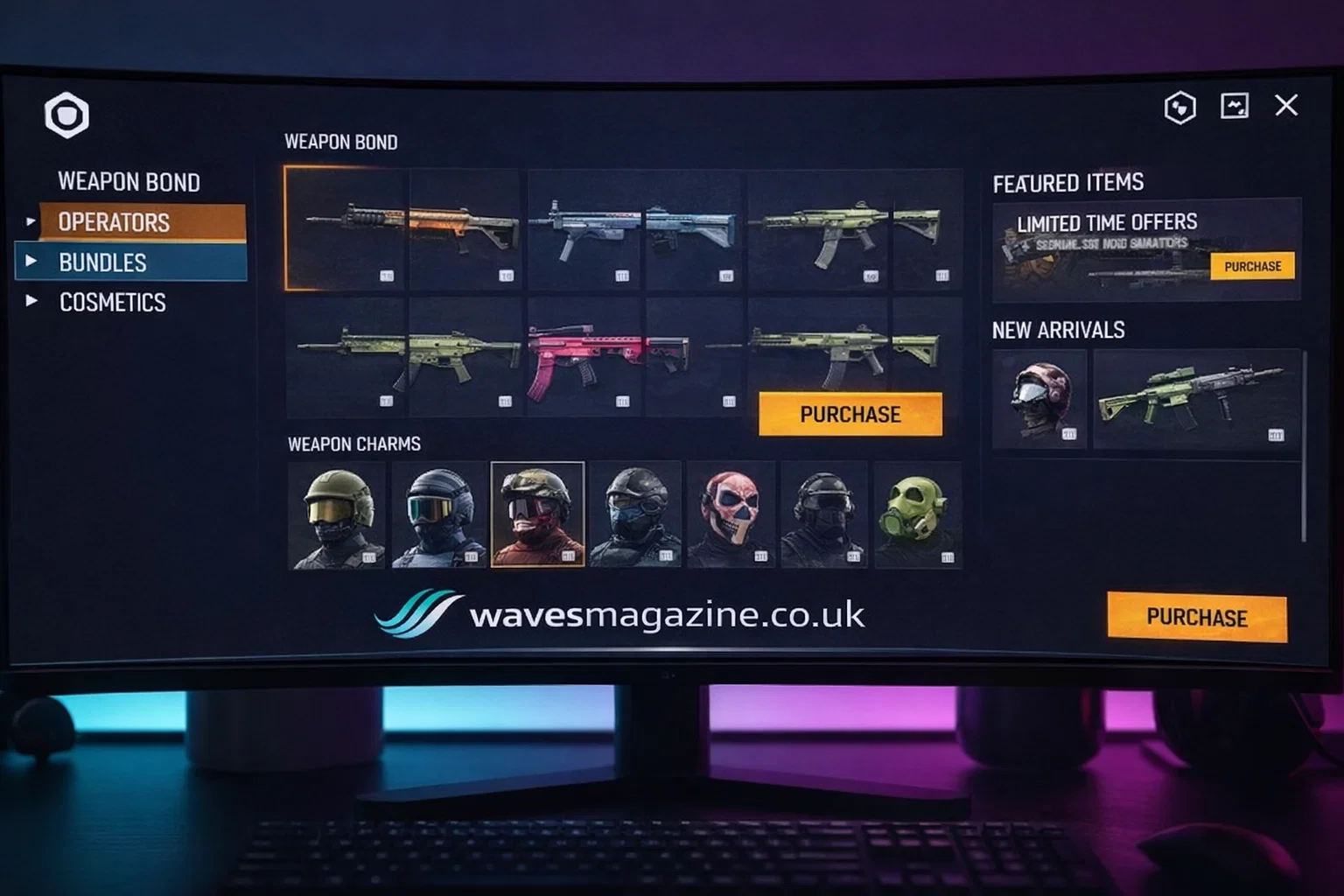
The R6 marketplace is an official trading ecosystem inside Rainbow Six Siege where players can exchange cosmetic items using a structured Ubisoft system. It is designed as a controlled in-game trading platform that connects directly with Ubisoft Connect and the wider Ubisoft ecosystem. The goal is to give players a safe environment where cosmetic value can be exchanged without relying on unsafe external trading methods.
This system plays an important role in the Rainbow Six Siege skin economy because it changes how players interact with digital items. Instead of random trades or third-party exchanges, everything happens inside a player-driven marketplace that follows strict Ubisoft trading system rules. Items such as weapon skins, operator skins, charms, and uniforms all become part of a structured digital item marketplace where value is determined by demand and availability.
The introduction of this system also aligns with modern gaming marketplace economy trends where in-game assets are treated with more structured value systems. Players now interact with a secure system that uses R6 credits system for transactions, making the entire process more stable and controlled.
What is Rainbow Six Siege Marketplace
The Rainbow Six Siege marketplace is the official Ubisoft Connect marketplace that allows players to buy, sell, and trade cosmetic items within the game ecosystem. It functions as the central Siege marketplace where users can manage their cosmetic collections and interact with other players through listings.
This system is sometimes called the R6S marketplace or Siege marketplace by the community, but it always connects back to Ubisoft’s official trading structure. It is not a free trade environment but a regulated platform where every action is recorded through an in-game trading platform system. The purpose is to ensure fairness and consistency in item exchange.
Within this environment, players participate in a virtual item marketplace system where cosmetics such as skins and charms gain value based on rarity and demand. The platform also strengthens Ubisoft Connect integration by linking player accounts and inventories directly to trading activity.
Core Structure of the Trading System
The Rainbow Six Siege trading system operates through a structured order-based mechanism. Every action in the marketplace follows a controlled process that includes buy order system and sell order system functionality. This ensures that trades happen only when conditions match between buyers and sellers.
Each listing becomes part of a larger order book system that tracks supply and demand in real time. When a player lists an item, it enters marketplace orders, which are then processed by a price matching system that automatically connects suitable trades. This removes the need for manual negotiation and keeps the system stable.
Players manage trading inventory inside their accounts, where listed items remain visible until sold. Every transaction is recorded through a transaction system that ensures transparency and traceability. The use of Ubisoft currency ensures that all trades remain within the official ecosystem, reducing risk and improving account-linked trading security.
Supported Cosmetic Items in Marketplace
The system focuses mainly on cosmetic items, which form the core of the cosmetic trading hub inside Rainbow Six Siege. These items do not affect gameplay but carry visual and collectible value that makes them important in the gaming skin economy.
Weapon skins are one of the most traded categories, including famous designs like Black Ice skins and Glacier skins. Operator skins, uniforms, headgear, and charms are also part of the system. Attachment skins and bundle items increase variety and allow players to personalize their experience.
Limited-time skins and Pro League skins often gain higher value due to scarcity and esports cosmetic relevance. Some items are tied to special events, making them collectible in-game items that players want to preserve or trade strategically. These items contribute heavily to the overall Ubisoft cosmetic economy system.
Item Categories and Trading Status Overview
Item classification plays a major role in determining how trading works inside the Siege marketplace. Below is a structured table showing how different categories behave within the system.
| Item Type | Example Items | Trading Status |
|---|---|---|
| Weapon Skins | Black Ice, Glacier | Tradable |
| Operator Skins | Uniforms, Headgear | Tradable |
| Charms | Weapon charms | Tradable |
| Event Cosmetics | Seasonal skins | Restricted |
| Esports Bundles | Pro League skins | Partially Eligible |
This classification helps maintain balance in the virtual marketplace system while ensuring that restricted items remain under Ubisoft control. It also supports the idea of item scarcity trading, where availability directly affects market value.
How Buying Works in R6 Marketplace
Buying items in the R6 marketplace follows a structured process that is easy for players to understand but still controlled by system logic. Players first search for items in the Siege marketplace and check available listings. Each listing shows current market value based on active demand.
To complete a purchase, players can place a buy order system request or select an existing listing. The system then uses order matching system explained logic to match the buyer with a seller at the correct price. Once matched, the transaction system completes the exchange using R6 credits system.
This process is part of a broader marketplace buying guide structure that ensures players always interact within safe and predictable trading conditions. It also helps maintain stability in the official game trading system.
How Selling Works in Siege Marketplace
Selling items in the Siege marketplace requires players to use the sell order system. This allows users to list items from their trading inventory and set a price based on market conditions. Sellers can adjust prices depending on demand and competition inside the player-driven marketplace.
Once an item is listed, it becomes part of marketplace price fluctuation dynamics. Other players may undercut or match prices, creating a competitive environment. Sellers often rely on seller pricing strategy to maximize returns from their cosmetics.
The how to sell skins in R6 process also depends on understanding timing and demand cycles. Players who manage listings carefully often benefit from better in-game asset valuation and improved trading outcomes.
Pricing System and Market Behavior
The pricing system inside the R6 marketplace is influenced by multiple factors that reflect real digital economy behavior. Supply and demand are the most important drivers, but rarity also plays a major role in determining item value.
Skin rarity system influences how much players are willing to pay for certain cosmetics. Rare cosmetic marketplace items such as Black Ice skins often maintain high value due to limited availability. Seasonal skin availability and limited edition skins trading also affect price movement.
Market behavior is shaped by competitive pricing marketplace conditions where players constantly adjust listings. This creates a dynamic system similar to other virtual marketplace trends seen in modern gaming environments.
Security and Anti-Scam Protection
Security is a core feature of the Ubisoft marketplace system. The platform is designed as a secure game marketplace where all transactions are protected by Ubisoft anti-fraud system measures. This ensures that players do not face risks associated with external trading platforms.
The system uses account-linked trading to verify identity and maintain safe exchanges. Every transaction is processed through a scam-free marketplace system that eliminates the possibility of fraudulent activity. This makes it a safe skin trading platform for all users.
By controlling the entire process within Ubisoft Connect, the system ensures transparency and consistency. Players can trust the platform as it is fully integrated into the official Ubisoft trading system.
Eligible and Restricted Items Rules
Not all items in Rainbow Six Siege can be traded. The marketplace uses eligibility rules to control which cosmetics can enter the system. This ensures balance in the in-game item exchange platform.
Eligible items usually include standard cosmetic items that do not affect gameplay. Restricted items often include battle pass item restrictions, event exclusive cosmetics, and certain seasonal skins. These rules maintain fairness and prevent exploitation of rare content.
The marketplace beta structure also allows Ubisoft to test item flow and adjust rules based on player feedback. This helps improve the long-term stability of the system.
Market Trends and Player Economy
The gaming marketplace economy inside Siege reflects larger trends in digital economies. Players interact with a system where value is constantly changing based on demand, rarity, and player interest.
The player-to-player economy creates a dynamic environment where cosmetic items gain or lose value over time. Digital collectibles trading system behavior shows how rare items become more desirable as availability decreases.
Esports cosmetic marketplace items also influence trends, especially during competitive seasons. These shifts make the system active and responsive to community behavior.
Buying and Selling Strategies
Players often develop strategies to improve performance inside the tactical shooter marketplace. These strategies focus on timing, pricing, and market observation.
Understanding marketplace price fluctuation helps players decide when to buy or sell. Some players focus on buying during low-demand periods and selling during peak activity. Others rely on competitive pricing marketplace techniques to stay ahead of listings.
The marketplace selling guide approach often includes tracking item demand, monitoring trends, and adjusting pricing based on market movement. These strategies help players improve results in the Ubisoft cosmetic economy system.
Trading System Overview Table
| Feature | Description |
|---|---|
| Buy Order System | Request to purchase item |
| Sell Order System | Listing item for sale |
| Order Book System | Matches buyers and sellers |
| Price Matching System | Automatic price alignment |
| Transaction System | Final exchange process |
This structure defines how the official R6 trading hub operates inside the Ubisoft ecosystem.
Ubisoft Connect Integration Role
Ubisoft Connect marketplace is the backbone of the entire system. It connects player accounts, inventories, and transaction data into a unified structure. This ensures smooth operation of the R6 trading hub across all supported platforms.
The integration supports player inventory trading system functionality and ensures that every cosmetic exchange is recorded securely. It also manages Ubisoft currency flow and ensures consistency across the digital asset marketplace.
This tight integration makes the system reliable and consistent across all Rainbow Six Siege platforms.
Future Development of Siege Marketplace
The future of the Siege X update marketplace points toward expanded trading features and improved system flexibility. Ubisoft is expected to enhance cosmetic item exchange platform systems and improve order matching efficiency.
Future improvements may include broader esports cosmetic marketplace integration, more tradable items, and improved valuation tools. These changes will strengthen the overall virtual asset marketplace structure and enhance player experience.
As the system evolves, the gaming marketplace economy inside Siege is expected to become more structured and dynamic.
Conclusion
The R6 marketplace represents a major shift in how cosmetic trading works inside Rainbow Six Siege. It introduces a structured Ubisoft trading system that prioritizes safety, fairness, and controlled value exchange. Players now interact with a system that reflects real digital economy principles while remaining inside a secure environment.
By combining weapon skins, operator cosmetics, and a regulated transaction system, Ubisoft has built a stable ecosystem for cosmetic trading. This system continues to evolve and plays an important role in the future of in-game trading platforms.
FAQs
1. What is R6 marketplace used for?
It is used for trading cosmetic items like skins and charms inside Rainbow Six Siege using an official Ubisoft system.
2. Is R6 marketplace safe?
Yes, it is secured by Ubisoft anti-fraud systems and account-linked trading protection.
3. What items can be traded in R6 marketplace?
Weapon skins, operator skins, charms, and other cosmetic items are generally tradable depending on eligibility rules.
4. How does pricing work in the marketplace?
Prices depend on supply, demand, rarity, and player activity inside the system.
5. Can all players use R6 marketplace?
Access depends on account eligibility and Ubisoft rules, especially during marketplace beta phases.

Who Is Karen Carney Full Life Story and Net Worth

Teresa Rice Complete Biography Life Story and Career

Who Is Rodney Timson Actor Profile

Who is Elizabeth Huberdeau? Life, Biography and Divorce Story

Who Is Amelie Pease? Complete Profile, Biography and Career Details

Who Is Claude Edward Elkins Jr Career and Life Story
-
 Celebrity6 months ago
Who is Elizabeth Huberdeau? Life, Biography and Divorce Story
-
 Celebrity6 months ago
Who Is Amelie Pease? Complete Profile, Biography and Career Details
-
 Celebrity6 months ago
Who Is Claude Edward Elkins Jr Career and Life Story
-

 Celebrity6 months ago
Deja Jackson Age, Biography and Private Life
-

 Celebrity6 months ago
Everything You Need to Know About Thomas Boone Quaid Biography and Life Story
-

 Celebrity6 months ago
Complete Profile of Emily Compagno Husband Peter Riley and Life Story
-

 Celebrity6 months ago
Who Is Maia Lafortezza Complete Profile Explained
-

 Celebrity6 months ago
Burt Thicke Life Story Internet Mystery and Viral Truth